Top Exterior Remodeling Projects with the Highest ROI
The highest-return exterior home remodeling projects are the ones buyers and appraisers can see immediately and value practically: new siding, better windows, and a stronger entry. Siding replacement often leads the list because it changes the largest visible surface of the house while improving protection against moisture, insects, and weather exposure. Fiber cement siding is especially compelling for homeowners who want low maintenance, long service life, and a premium look; quality vinyl siding can also improve curb appeal at a more accessible project cost.
Energy-efficient windows add ROI in two ways: they refresh the facade and support lower heating and cooling demand. Replacing deteriorated frames, fogged glass, or undersized windows can make the home feel newer from the street and brighter inside. Larger picture windows or well-proportioned replacements may also strengthen the indoor-outdoor connection, which many American buyers recognize as a livability upgrade. During appraisal, documented window improvements can support stronger property value when paired with consistent installation quality and code-compliant work.
A front door replacement is smaller in scope but powerful in first impressions. A secure, well-insulated door with updated hardware, sidelights, or a bold but tasteful color can make the entry feel intentional rather than dated. For the best ROI, align each upgrade with the home’s architecture, neighborhood expectations, and climate. Spending USD wisely means prioritizing visible defects, energy performance, and durable materials before purely decorative add-ons. A licensed contractor such as Doug Construction can help compare options, estimate costs, and sequence projects for measurable value.
Essential Materials for a Durable Home Exterior
Material selection is the backbone of exterior home remodeling because every finish must protect the structure while supporting curb appeal. In most U.S. homes, roofing, siding, trim, and masonry details work together as a weather barrier against rain, wind, storm seasons, UV exposure, humidity, and temperature swings.
For the roof, asphalt shingles remain popular because they are widely available, cost-effective, and suitable for many architectural styles. Architectural shingles add thickness and dimension, and some products are designed to reflect UV rays for better thermal performance. Metal roofing, especially standing seam systems in lighter or cool colors, usually costs more upfront but offers strong weather resistance, sheds water efficiently, and can reduce heat absorption. The tradeoff is budget and style: shingles fit traditional neighborhoods easily, while metal can deliver a cleaner, more modern profile.
Siding should be judged by moisture control, impact resistance, and low maintenance. Fiber cement siding performs well because it resists insects, water exposure, cracking, and peeling better than wood or basic vinyl. Board-and-batten profiles can add texture without sacrificing architectural integrity when scaled to the home’s proportions.
At the foundation, entry, or chimney, stone veneer creates depth and a sense of permanence. Natural stone is highly durable and distinctive, but it is heavier, more expensive, and often slower to install. Manufactured stone veneer is lighter, more predictable in color, and often easier to budget, though installation quality is critical to prevent moisture problems. The best exterior palette uses durable materials selectively, matching climate, maintenance expectations, and long-term property value.
Modern Design Trends for Your Home’s Facade
Today’s facade trends favor clean lines, purposeful contrast, and materials that look refined without feeling cold. The modern farmhouse style remains popular because it pairs crisp white or warm neutral siding with black window frames, simple trim, and a welcoming front door. For a more dramatic exterior home remodeling update, charcoal, deep navy, and matte black can be used on shutters, doors, garage doors, or accent panels while the main color palette stays balanced and neighborhood-friendly.
Mixed textures are another strong way to make a home feel current. Smooth fiber cement siding can be combined with board-and-batten sections, wood-look accents, brick, or stone veneer to create depth across large flat walls. The key is restraint: use texture to highlight entries, gables, porch columns, or the base of the home rather than covering every surface. This keeps the facade modern, adds curb appeal, and helps each material look intentional.
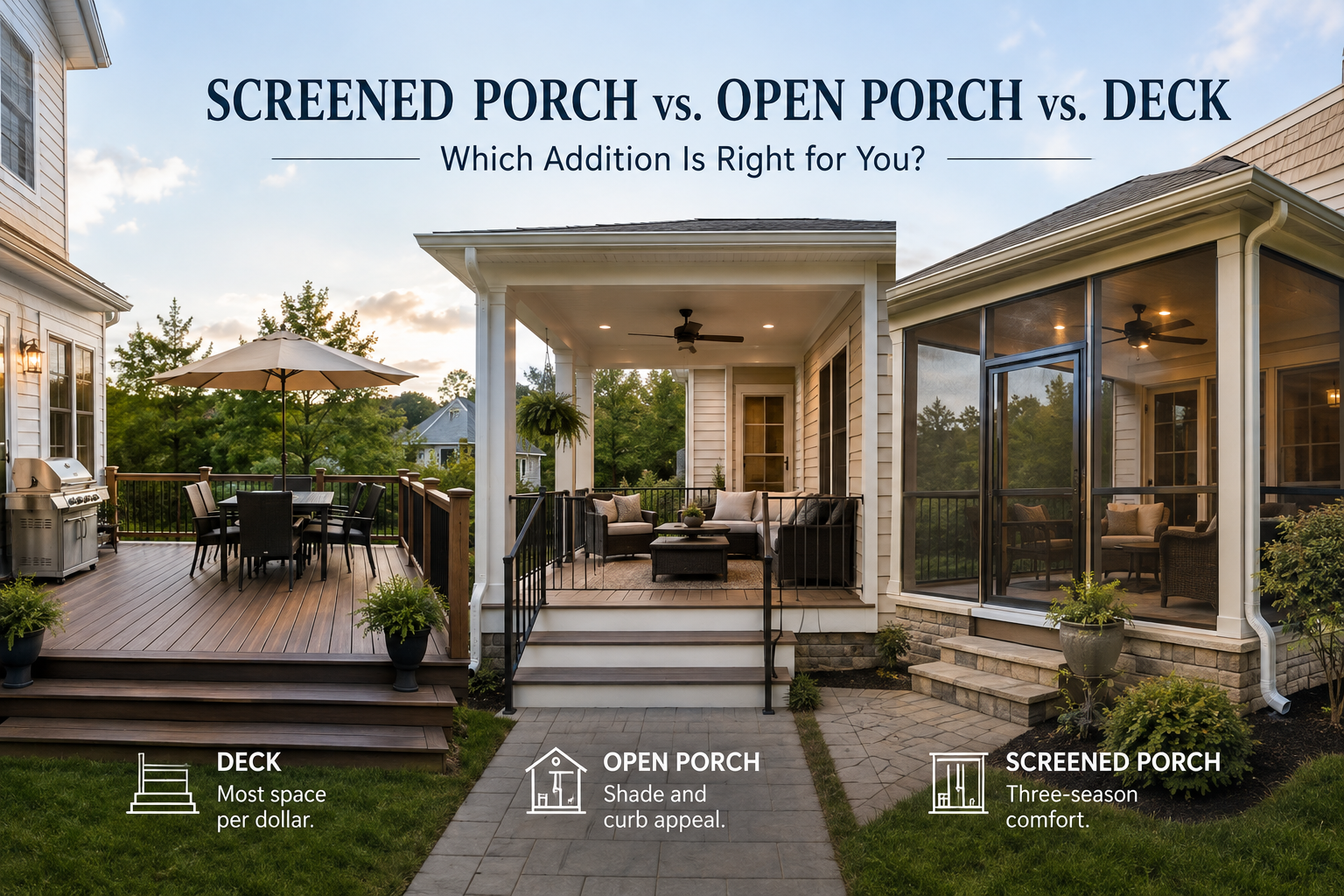
Outdoor lighting now functions as both design and safety. Slim sconces, recessed porch lights, pathway fixtures, and uplighting for architectural details can frame the home after dark and improve the arrival experience. Warm, consistent light usually feels more inviting than harsh, mismatched fixtures. Exterior living upgrades such as decks, porches, and patios can also improve the way the home looks and functions from the outside.
Landscaping integration completes the design. Lower plantings can open sightlines to windows and trim, while layered beds soften hard materials. Avoid shrubs that will eventually block natural light or hide the entry. When the color palette, lighting, mixed textures, and planting plan work together, your facade feels cohesive, contemporary, and ready to support long-term property value and confident buyer perception over time.
How to Plan Your Exterior Renovation Budget
A strong exterior home remodeling budget starts with a clear scope. List every visible upgrade, including siding, roofing, windows, doors, stone veneer, lighting, paint, gutters, and landscaping. Separate must-have structural work from cosmetic improvements so renovation costs stay tied to priorities, curb appeal, and long-term protection.
Before requesting estimates, define the materials you prefer and the performance you need for your climate. Fiber cement siding, architectural shingles, energy-efficient windows, and durable trim can change both upfront pricing and future maintenance. Ask each licensed contractor for an itemized proposal covering labor, materials, disposal, warranty terms, and the project timeline.
Permits should be planned early, not treated as an afterthought. Exterior changes may need building permits when they affect structural components, window openings, roof assemblies, electrical lighting, or porch additions. Requirements vary by local building codes, so homeowners in Fairfax, Alexandria, Arlington, Ashburn, and nearby Northern Virginia areas should confirm responsibilities with the contractor and keep approval time inside the schedule.
Set aside a 10-15% contingency fund for hidden water damage, rotted sheathing, insect damage, outdated flashing, or code-related corrections discovered after demolition begins. This reserve helps prevent rushed decisions and protects the quality of the finished facade. If moisture issues are already present, professional water damage restoration may need to happen before cosmetic upgrades.
Compare bids by value, not just the lowest number. A reliable estimate should explain allowances, payment milestones, cleanup, change-order procedures, and insurance coverage. If the budget is tight, phase the work logically: repair moisture risks first, then improve high-impact details such as the entry, trim, lighting, and landscaping.
Final Recommendation
Exterior home remodeling is more than a visual upgrade; it protects your structure, strengthens curb appeal, and can support long-term property value when planned with the right materials and workmanship. Whether you are comparing siding, roofing, windows, stone veneer, lighting, or entry updates, expert guidance helps align design goals with budget and local requirements.
Doug Construction can help you evaluate options confidently, from targeted exterior upgrades to larger full home remodeling projects. Ready to transform your home? Contact Doug Construction today to get a personalized quote and start your remodeling journey.