Lighting Trends for Kitchen Remodeling in Northern VA
Kitchen remodeling in Northern VA (Arlington, Fairfax, Loudoun, and Prince William) is getting more design-forward—especially when it comes to lighting. In 2025, the biggest shift is simple: lighting isn’t just “bright enough” anymore. It’s layered, controllable, and intentionally styled to make the kitchen look premium while improving everyday function. The best kitchen remodelers are treating lighting like a system—not a last-minute fixture choice.
If you're curious about what Northern Virginia kitchen remodeling lighting trends will be hot in 2023, keep reading for tips from the experts. We can expect to dominate a few new aesthetics, whether you're looking for a unique chandelier or just trying to add visual interest with some table lamps.
Best Lighting Trends for Kitchen Remodeling in Northern VA
Here are some things to consider when updating your kitchen lighting and some modern lighting trends for a kitchen remodel in Northern VA you can incorporate into your project if you do so. Doug Construction can offer you popular bathroom designs in Alexandria, VA, that can fulfill the needs of Kitchen Remodeling in Northern VA.
1) Layered Lighting Becomes the Standard
The most consistent trend is layering: combining ambient + task + accent lighting so the kitchen works for cooking, cleaning, entertaining, and late-night snacks—without harsh overhead glare. Designers commonly frame this as a “three-layer” approach because it’s the easiest way to make a kitchen feel expensive and comfortable. Homes and Gardens+1
Northern VA pro tip: open-concept kitchens benefit even more from layered lighting because it helps “zone” the island, sink, and perimeter counters.
2) Under-Cabinet LEDs Are Non-Negotiable
Under-cabinet lighting is no longer a luxury add-on—it’s becoming the baseline for a modern kitchen remodel. LED strips (often diffused) create clean, shadow-free countertop light and instantly upgrade the kitchen’s look at night. Many smart remodel concepts in Fairfax County also emphasize under-cabinet LEDs that can shift color temperature throughout the day.
What to ask your remodeling contractor: “Will the under-cabinet lighting be hardwired and dimmable?” (This matters for usability and resale.)
3) Statement Fixtures Over Islands Keep Dominating
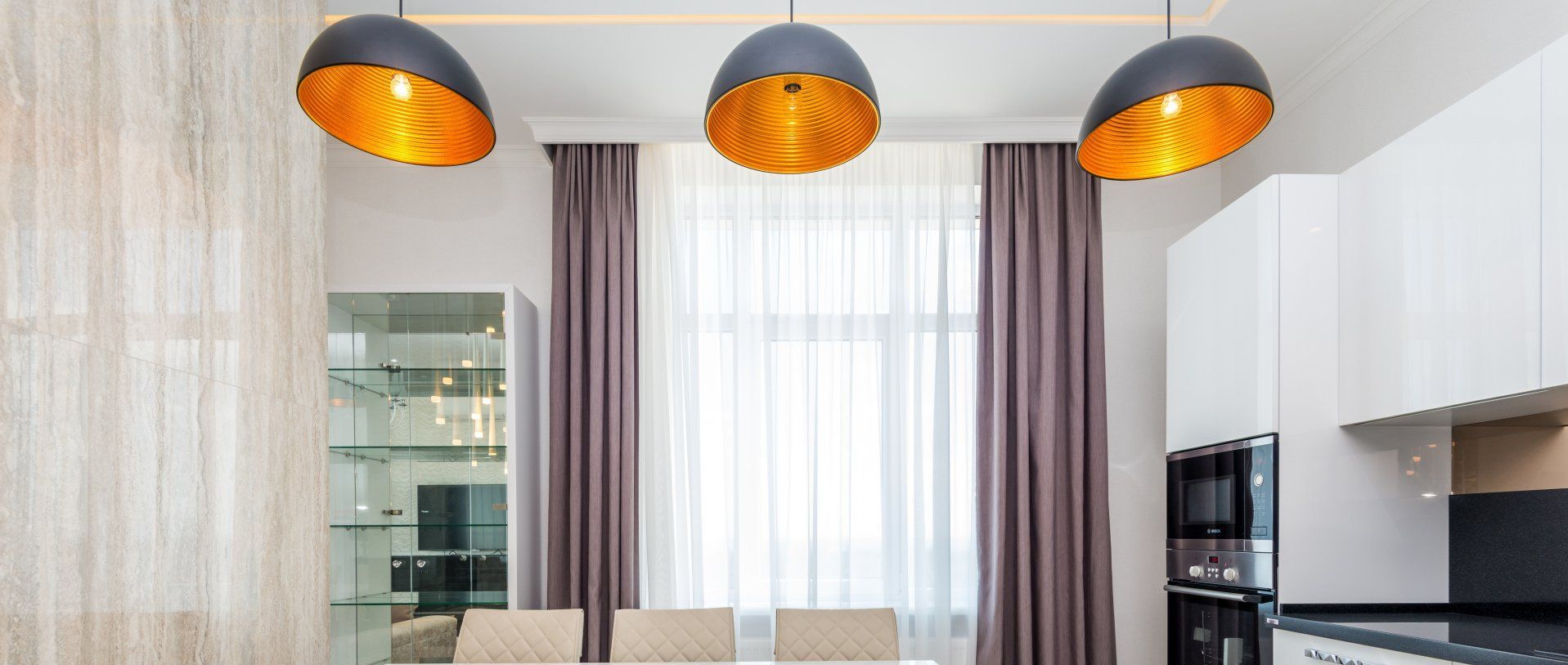
Northern VA homeowners are still leaning into statement lighting—especially pendants over islands and bolder fixtures that act like jewelry for the kitchen. Local remodeling content highlights statement lighting as a showpiece move, not just functional illumination.
For 2025, the statement trend is also shifting toward more sculptural looks (glass-forward, vintage-inspired, or artisanal silhouettes) rather than basic industrial pendants.
4) Mixed Finishes: Warm Metals Are Winning
Kitchens are moving away from “everything matches.” A popular direction is mixing finishes—like brushed nickel with warmer metals (champagne brass, aged brass tones) for a more custom, designer feel.
Easy rule that looks intentional: choose 2 main finishes + 1 accent finish, then repeat each at least twice (fixtures + hardware, or fixtures + faucet).
5) Smart Controls and Dimmers Aren’t Optional Anymore
Homeowners want lighting that adapts: bright for prep, soft for dinner, low for night. That’s driving the rise of dimmers, occupancy sensors, and smarter control setups. In Virginia, energy code language also ties permanently installed lighting to control requirements (e.g., dimmers/occupant sensors/other controls), making “control planning” something your home remodeling services should address early—not after drywall.
6) “Mood-First” Lighting: Warm, Comfortable, Not Blue
Northern VA remodels are increasingly favoring warmer, softer lighting that feels inviting (especially in open layouts connected to living areas). The practical version of this trend is dimmable, layered lighting rather than a single bright temperature everywhere.
Remodeling your kitchen in Northern VA?
Book a free consultation and get a lighting plan that blends function, style, and code-smart controls—before construction starts.